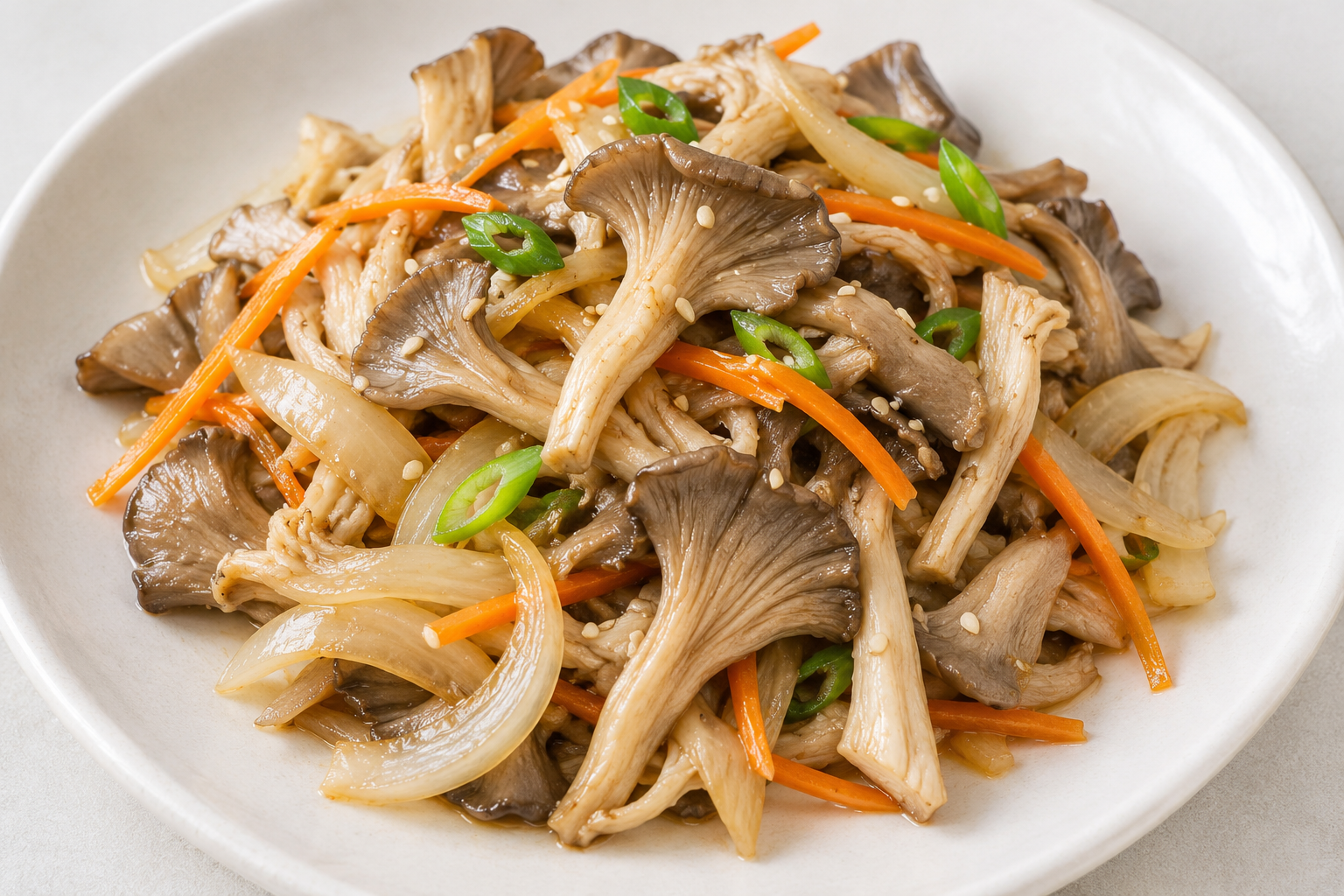
This Korean-style oyster mushroom stir-fry uses 300g of prepared mushrooms, a little onion and carrot, and a measured soy-sauce seasoning. The mushrooms go into the pan first; the vegetables and sauce join them later. Spreading the mushrooms loosely makes it easier to manage their liquid without continually adding more seasoning.
Plan for 2–3 side-dish servings, about 10 minutes of preparation and 8–12 minutes of cooking. These are estimates, not a fixed doneness schedule. A small skillet or damp mushrooms can require more time, particularly if you cook in batches. Check the thickest stems before serving.
한국어 레시피 보기. The four images are AI-generated cooking illustrations, not photographs of a personally cooked or tasted dish. Follow the written measurements and doneness checks rather than the pictured quantities or color.
Ingredients for 300g of oyster mushrooms
- 300g cultivated oyster mushrooms, weighed after trimming the firm joined base
- 50g onion, 20g carrot and 10g scallion
- 15mL neutral cooking oil: reserve 10mL for the mushrooms and 5mL for the vegetables
- 10mL regular brewed soy sauce (2 teaspoons)
- 3g minced garlic, approximately 1/2 teaspoon, and a little black pepper
- Optional finish: 5mL toasted sesame oil (1 teaspoon) and about 1/2 teaspoon toasted sesame seeds
- 5–10mL water only if the pan threatens to scorch before the vegetables are ready; do not add it at the start
Measures here use a 15mL tablespoon and 5mL teaspoon. Prefer the weight for garlic because spoon packing differs. Start with 10mL soy sauce, taste a cooled piece at the end, then add more only in 2.5mL (1/2 teaspoon) increments if needed. This base recipe contains no oyster sauce, cooking wine or added sugar.
Choose the right mushroom and a roomy skillet
Oyster mushrooms have small fan-shaped caps and stems that separate into strips. They differ from king oyster mushrooms, whose thick central stalks need a different cutting approach. Check the package rather than assuming every bag labelled “oyster” will cook at the same rate. Use cultivated mushrooms sold as food for this recipe.
Regular brewed soy sauce is the starting point. Korean soup soy sauce, dark soy sauce and oyster sauce have different saltiness or flavor and are not required here. If you choose a reduced-salt or gluten-free product, use its label to check suitability and adjust the finished dish gradually.
A wide 26–28cm skillet is a useful starting size, but its flat cooking surface matters more than the nominal diameter. If 300g makes a deep heap, cook two 150g batches. Have a spatula and a plate ready so the mushrooms can be lifted out while the vegetables cook. Follow your pan manufacturer’s heat instructions; avoid prolonged empty heating or oil heated until smoking.
1. Trim, separate and dry the mushrooms
Remove the tough joined base and visible debris, following any preparation instructions on the package. If you rinse the mushrooms, drain them thoroughly and pat away the surface moisture. Putting wet pieces straight into a small pan makes moisture control harder. Do not crush the raw mushrooms by wringing them tightly.
Separate larger clusters into bite-size pieces and split thick stems lengthwise into strips roughly 5–8mm thick. Leave the small caps intact where practical. Slice the onion about 3–4mm thick, cut the carrot into fine strips about 2mm thick and set the chopped scallion aside. Thick carrot batons can keep the pan on the heat after the mushrooms are already ready.

2. Cook the mushrooms in a loose layer
Warm 10mL of the oil over medium heat and spread in the mushrooms. Leave them relatively undisturbed for the first couple of minutes, checking whether the undersides develop a little color. Lift and turn, then cook for another 2–3 minutes as they soften. They do not need a dark crust or constant high-heat tossing.
If liquid collects, leave the lid off and give it a chance to reduce. When pieces are piled on top of each other, take some out and cook in batches instead of repeatedly increasing the heat. Lower the heat if the edges start to blacken or the oil smokes. Surface browning is only one cue: the stems also need to soften. Transfer the mushrooms to the waiting plate.

3. Soften the vegetables, then add the soy sauce
Add the reserved 5mL oil to the same skillet. Cook the onion and fine carrot strips over medium heat for about 2 minutes, until the onion edges turn translucent and the carrot begins to bend. Add the minced garlic and stir for another 20–30 seconds. Adding garlic at this stage helps avoid leaving tiny pieces against a hot pan throughout the mushroom cooking time.
Return the mushrooms and distribute 10mL soy sauce over the food. Stir-fry for another 1–2 minutes. This method does not call for burning the sauce against an empty rim of the pan. If the bottom is catching while a thick stem or carrot strip is still firm, lower the heat and add just 5–10mL water. Cook until ready, then let excess liquid evaporate without a lid.

4. Check the stems, then finish gently
Split a thick stem and check that it is hot and cooked through, with no tough raw center. Color on the outside alone is not enough. Cooked oyster mushrooms can retain some springiness; they do not have to fall apart. Aim for a moist coating rather than a pool of liquid or a completely dried-out pan.
Fold in the scallion for about 30 seconds and turn off the heat. Let a small piece cool before tasting and deciding whether any extra soy sauce is needed. Finish with the optional sesame oil, sesame seeds and a little pepper. Serve a small portion alongside rice and other dishes such as tofu or eggs.

Troubleshoot liquid, tough stems and too much salt
- Liquid pooling at the bottom: check whether the skillet is crowded or the rinsed mushrooms were still wet. Spread the food out, use batches and leave the lid off. Extra soy sauce increases saltiness without solving the crowding.
- Tough stems: look for a piece of firm joined base or an unusually thick strip. Split thick pieces and finish them with gentle heat and a small splash of water if necessary.
- Burned garlic before the mushrooms are done: lower the heat. Next time, follow the sequence of mushrooms first, then vegetables and garlic, then the combined seasoning.
- Too salty: adding water and later boiling it all away leaves the salt behind. Combine with separately cooked unseasoned mushrooms or onion, or serve a smaller amount with plain rice.
- Oily but lacking a glossy coating: assess moisture before reaching for more oil. Keep the sesame finish measured and add it after switching off the heat.
Half batches, double batches and substitutions
For a half batch, use 150g mushrooms, 25g onion, 10g carrot, 5g scallion, 7.5mL cooking oil, 5mL soy sauce and 1.5g garlic. The optional sesame oil becomes 2.5mL. Small batches can dry quickly, so watch the pan and do not simply halve every cooking time.
For double, start with 600g mushrooms, 100g onion, 40g carrot, 20g scallion, 30mL cooking oil, 20mL soy sauce and 6g garlic, with 10mL sesame oil if using. In the same skillet, make two separate 300g batches. The second starts with a warmer pan, so check the food rather than assuming the first batch’s timing is exact.
Leaving out the onion or carrot changes sweetness, moisture and the total quantity of food. Keep the starting soy sauce modest and make final adjustments after cooking. If using king oyster mushrooms instead, cut their thick stems into thin pieces and assess them separately. Replacing the soy sauce with an equal amount of oyster sauce also changes seasoning and allergens.
Allergens, refrigeration and reheating
Check soy sauce for soy and wheat, and sesame products for sesame allergens. Oyster mushrooms are mushrooms; the English name does not mean that this recipe contains oysters. There is no oyster sauce in the ingredient list. If sesame is unsuitable, omit both the sesame oil and seeds and use a cooking oil that suits your dietary requirements.
Following the UK Food Standards Agency’s general leftovers guidance, divide leftovers into shallow portions, cool promptly and refrigerate within two hours. Use refrigerated leftovers within 48 hours. Reheat only the amount needed until steaming hot throughout, and only once. Do not rely on refrigeration or reheating to rescue food with an uncertain storage history. This is general handling guidance, not a shelf life established by testing this recipe.
References and more Korean side dishes
Kim Yong-ja’s mushroom stir-fry column provides an example of pan-cooking mushrooms and seasoning after some surface browning. The measured 300g formula, vegetable quantities and checkpoints here were composed separately.
Maangchi’s oyster mushroom stir-fry demonstrates a different method that blanches mushrooms before stir-frying. This version goes directly into the skillet; its quantities and timing should not be treated as interchangeable with that recipe. Leftover handling follows Food Standards Agency guidance. References checked November 7, 2026. No personal cooking or tasting experience is claimed.
답글 남기기