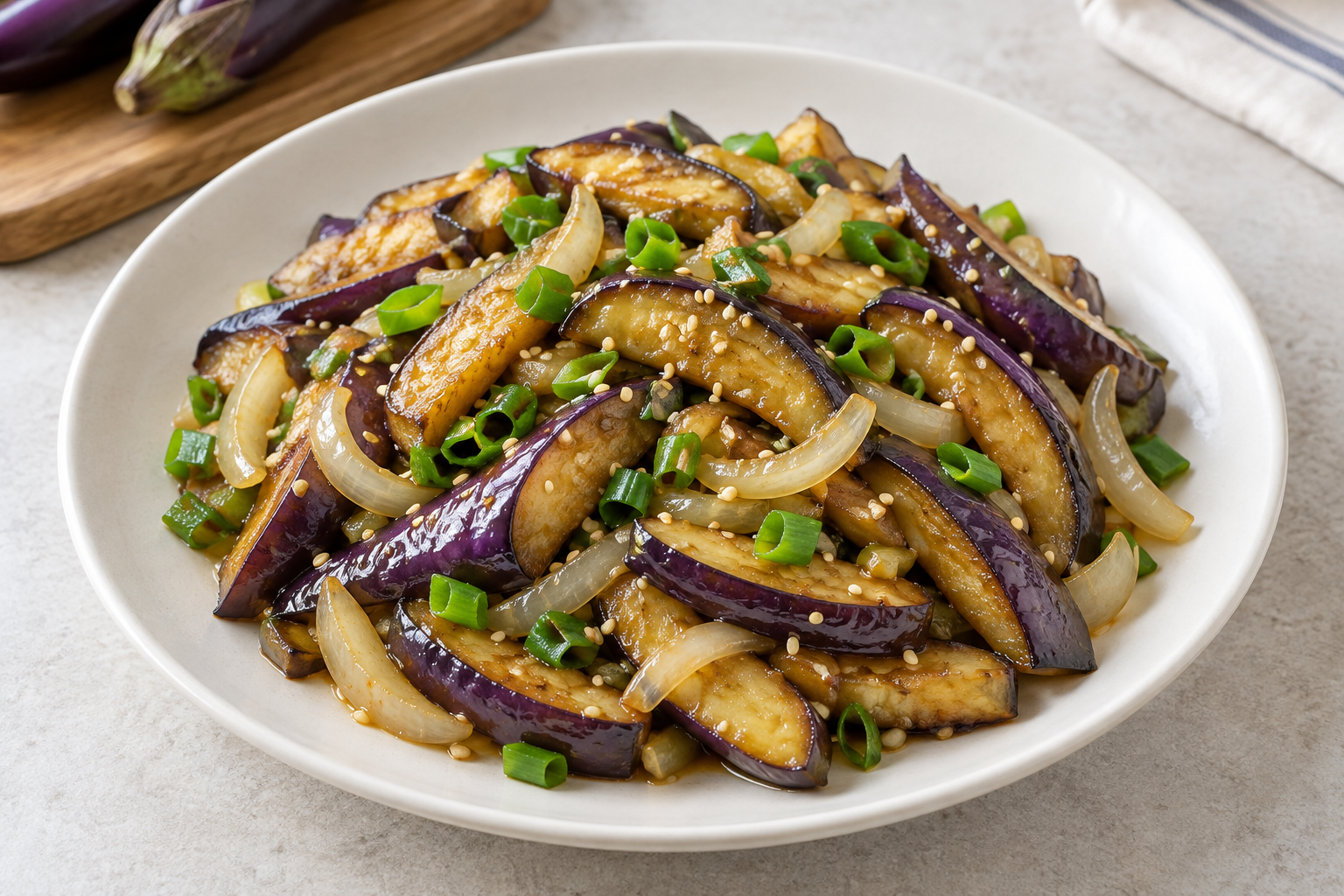
Gaji bokkeum is a Korean eggplant side dish. This mild, soy-seasoned version starts with 300g of trimmed slender eggplant and uses a wide skillet to keep the pieces easy to turn. The useful distinction is between a dry-looking pan and an undercooked center: more oil is not always the adjustment you need.
Allow about 10 minutes to prepare and 8–10 minutes to cook, for 2–3 side-dish servings. These are planning estimates, not fixed doneness times. Check the thickest piece before stopping. 한국어 레시피 보기.
The four images are AI-generated cooking examples, not photographs of a dish personally cooked or tasted. Their pictured quantities are illustrative; follow the measured ingredient list.
Ingredients for a 300g eggplant batch
- 300g trimmed slender Korean or Asian eggplant, weighed after removing the stem ends
- 50g onion, sliced; 10g scallion, chopped
- 15mL neutral cooking oil (1 tablespoon)
- 10mL regular brewed soy sauce (2 teaspoons)
- 2g sugar (approximately 1/2 teaspoon)
- 3g minced garlic (approximately 1/2 teaspoon)
- 30mL water (2 tablespoons), with a little extra only if needed
- 5mL toasted sesame oil (1 teaspoon) and about 1/2 teaspoon toasted sesame seeds, optional, for finishing
Measures here use a 15mL tablespoon and 5mL teaspoon. Prefer the weights for garlic and sugar because spoon packing varies. Start with the listed soy sauce rather than trying to match the dark color of an illustration. Taste a cooled piece at the end; if it needs more seasoning, add soy sauce in 2.5mL (1/2 teaspoon) increments.
Choose the eggplant, soy sauce and skillet
Look for slender, firm eggplants with glossy purple skin. A count such as “two eggplants” can be misleading because their sizes differ. Large globe eggplant can be used, but cut it lengthwise into quarters before making bite-size slices. Its skin and texture may differ from slender Asian varieties, so expect to adjust the cooking time.
Use regular brewed soy sauce, such as Korean yangjo-ganjang or jin-ganjang. Korean soup soy sauce is not an equal-volume substitute for this starting point, and dark soy sauce is not required. Reduced-salt or gluten-free products may change both flavor and saltiness; check the label and season gradually rather than assuming all bottles behave alike.
A wide skillet around 26–28cm is a useful starting size, but usable cooking surface matters more than the number on the pan. The pieces should sit loosely rather than form a deep pile. Use two batches if necessary. Have a spatula, cutting board, knife and measuring spoons ready. Follow your nonstick pan manufacturer’s heat instructions and avoid prolonged empty preheating. This version does not call for salting or soaking the eggplant first.
1. Cut even pieces and mix the sauce
Rinse the eggplant under running water, dry the outside and remove the stem ends. Halve it lengthwise and cut diagonally into pieces about 7–8mm thick (roughly 1/3 inch). Rest each cut face on the board while slicing so the vegetable does not roll. Slice the onion about 5mm thick and set the scallion aside.
Mix the soy sauce, sugar, minced garlic and 30mL water in a small bowl. Keep the sesame oil and seeds for the end. Preparing the sauce before heating the pan lets you add it promptly when the eggplant begins to soften, rather than leaving the pieces on the heat while measuring.

2. Spread the eggplant and onion in the pan
Warm the cooking oil over medium heat, then add the eggplant and onion. Spread them out and cook for an initial 2–3 minutes, lifting and turning when the undersides begin to color. They do not need a dark crust. Avoid constant stirring, which can tear the pieces as they soften.
The oil may seem to disappear quickly. Pause before adding another spoonful: some of it has been absorbed by the eggplant. If the pan is starting to catch, lower the heat and move to the sauce step. Smoke or blackened patches mean the heat is too high; they are not a sign that the center is cooked.

3. Add the sauce and check the center
Once the surfaces start to soften, pour in the prepared sauce and fold gently. Continue over medium-low heat for about 3–5 minutes, watching the moisture at the bottom. Garlic and sugar can catch if the sauce is allowed to dry against a hot pan.
Press the thickest piece with a spatula or chopstick. If the center is still pale, firm and spongy, add 15mL water (1 tablespoon), cover and cook over low heat for about a minute before checking again. Lift the lid away from your face to release steam safely. Adjusting doneness and adjusting salt are separate jobs: extra soy sauce will not soften the center without also making the dish saltier.

4. Finish while the pieces still hold their shape
When the flesh looks more translucent and a chopstick enters without much resistance, uncover and let excess moisture evaporate briefly. Stop at a moist coating rather than reducing everything until the pan is bone-dry. Once tender, lift from underneath and fold only as needed.
Add the scallion and stir gently for about 30 seconds, then turn off the heat. Let a small piece cool before tasting and deciding whether it needs another little addition of soy sauce. Finish with the optional sesame oil and seeds. Serve in small portions alongside rice and other dishes, such as tofu or eggs. The eggplant alone is a side dish rather than a complete meal.

Troubleshoot oiliness, liquid and broken pieces
- Oily outside, firm inside: stop adding oil. Use a spoonful of water and gentle covered heat to finish the center. Next time, check slice thickness before changing the sauce.
- A puddle in the pan: if the eggplant is tender, uncover and evaporate the excess briefly. If it is still firm, finish cooking first. A crowded pan or additional onion changes the moisture balance.
- Pieces falling apart: stop cooking once tender. Prolonged heat and vigorous stirring can turn softened eggplant into a mash. Use fewer turns or slightly thicker slices next time.
- Dark surface with a pale center: lower the heat and supply a little water. Add the sauce after the initial stir-fry rather than leaving sugar and garlic against a dry pan from the start.
- Too salty at the end: water that is subsequently boiled away does not remove the salt. Combine with separately cooked unseasoned eggplant or onion, or serve a smaller amount with plain rice.
Half batches, double batches and substitutions
For a half batch, start with 150g eggplant, 25g onion, 7.5mL oil, 5mL soy sauce, 1g sugar, 1.5g garlic and 15mL water. Finish with 2.5mL sesame oil if using. Halve the scallion and seeds too. Do not automatically halve the cooking time; check the thickest piece.
For double the ingredients, use 600g eggplant, 100g onion, 30mL oil, 20mL soy sauce, 4g sugar, 6g garlic and 60mL water, with 10mL sesame oil at the end. Cooking two separate 300g batches in the same skillet is easier to control than piling in everything. Divide the measured sauce between batches, and decide on extra water separately for each pan.
This mild version needs neither gochujang nor cooking wine. If you want heat, serve chili separately so the base batch stays mild; adding a seasoned chili paste also changes sweetness and salt. If you omit the optional sesame finish, use a cooking oil suitable for your dietary needs. Check soy sauce labels for soy and wheat, and sesame products for sesame allergens. A gluten-free claim should come from the product label, not the appearance of the sauce.
Cooling, refrigeration and reheating
Following the UK Food Standards Agency’s general leftovers guidance, divide leftovers into shallow portions, cool promptly and refrigerate within two hours. Use refrigerated leftovers within 48 hours. Reheat only the portion needed until steaming hot throughout, and reheat only once. Do not use chilling or reheating to rescue food whose storage history is uncertain. These are general handling limits, not a shelf life established by testing this particular dish.
Eggplant may soften further after refrigeration and reheating. Plan the batch around how much you will use, and transfer the portion you are saving with clean utensils rather than repeatedly returning a serving plate to the storage container.
References and more Korean side dishes
Korean Bapsang: Gaji Bokkeum informed the choice of slender Asian eggplant and the sequence of stir-frying before adding sauce and, if needed, water. That linked recipe uses gochujang. The mild 300g formula, measurements and troubleshooting here were composed separately; they are not a transcription of its ingredient list.
Leftover handling reference: Food Standards Agency: Cooking your food — Using your leftovers. References checked on November 1, 2026. No personal cooking, tasting or nutrition-testing experience is claimed.
- Gyeranjjim: gently steamed eggs
- Sigeumchi namul: seasoned spinach
- Browse the K-Food recipe archive
- 한국어 가지볶음 레시피
답글 남기기