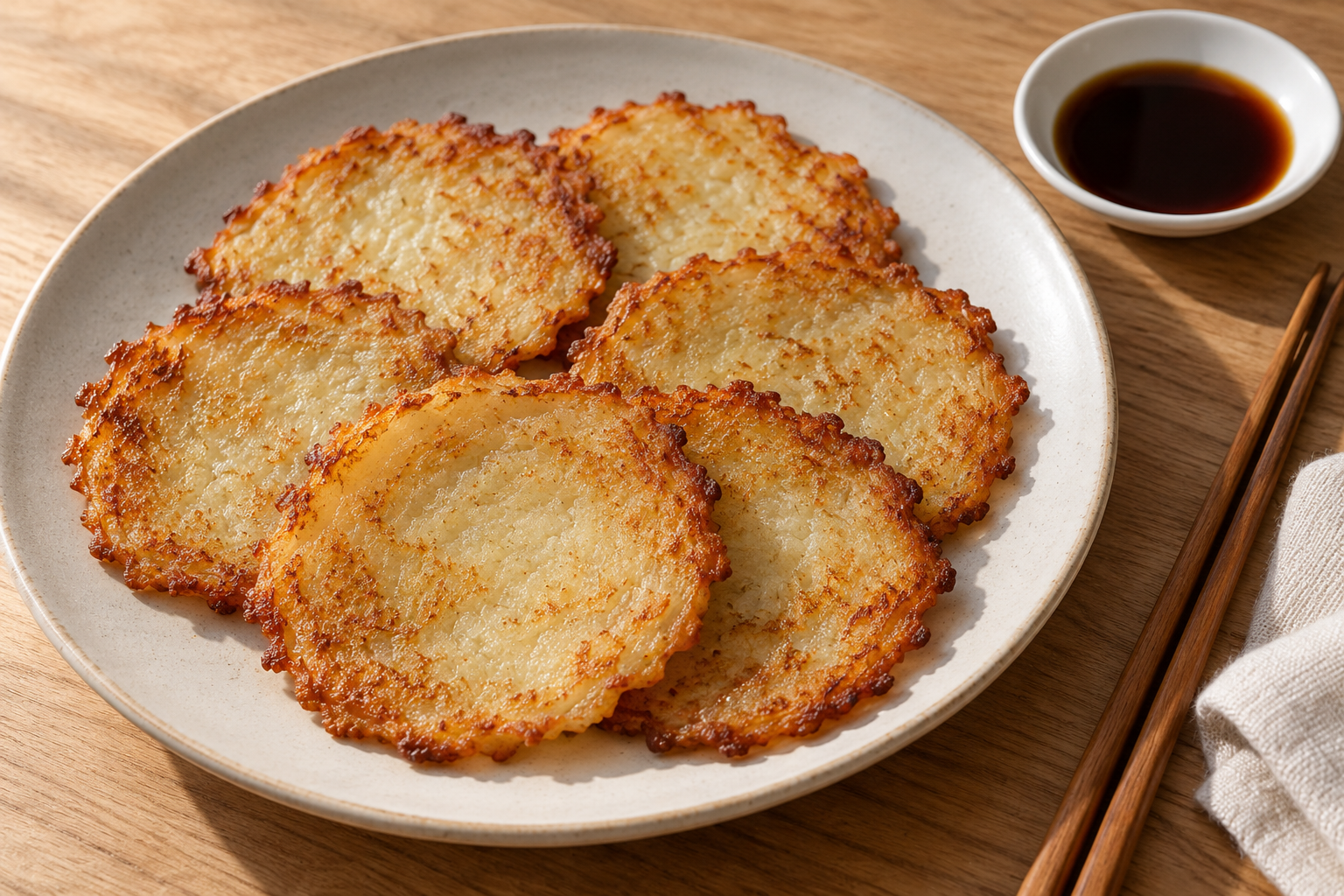
A Korean pancake without flour or eggs? Gamjajeon uses the starch already present in potatoes to hold the batter together. This small-batch guide starts with 500g of peeled potatoes and makes small rounds that are easier to turn than one pan-sized pancake. Expect browned edges and a tender, slightly chewy center.
Yield: about 6–8 small pancakes; serves 2 as a snack or side
Estimated time: 20 minutes to prepare and settle the starch, plus 10–15 minutes to cook in batches
Measures: 1 tablespoon = 15mL; 1 teaspoon = 5mL. Weigh the potatoes after peeling.
All four photographs below are AI-generated illustrations, not photographs of a tested cooking session. Potato varieties, pans and heat levels will affect the appearance of your results.
Ingredients and equipment
- 500g peeled potatoes (about 1.1lb or 3 medium potatoes; weight is more reliable than the count)
- 1/4 teaspoon fine salt; use a little less if serving with a salty dip
- 2 tablespoons neutral cooking oil to start, with a little extra if the pan needs it between batches
Optional quick dip: stir together 1 tablespoon soy sauce, 1 tablespoon water and 1 teaspoon vinegar. This version has no added sugar or chili. Check the soy sauce label for soy and wheat allergens; flour-free batter does not make every dipping sauce gluten-free.
Equipment: a fine grater, sieve, two bowls, spoon, wide spatula and frying pan. Use a hand guard when grating the last small pieces. Choose the fine grating surface rather than a coarse shredder: long shreds make a different style of pancake.

1. Grate and drain
Wash, peel and finely grate the potatoes. Set a sieve over a bowl, add the pulp and press gently with a spoon to release loose liquid. Keep that liquid. The pulp should stay damp, rather than being squeezed into a dry lump.
2. Recover the potato starch
Leave the liquid undisturbed for about 10 minutes. Carefully pour off the water, keeping the dense white starch at the bottom. Mix this starch back into the potato pulp with the salt.

3. Cook small rounds
Warm the pan over medium heat and add some of the oil. Spread spoonfuls into rounds about 8cm (3in) wide and 5mm (1/5in) thick, leaving space between them. Turn when the underside is golden and firm, roughly 3 minutes. Cook the second side for about 2–3 minutes, adjusting the heat as needed.
These times are starting points, not a fixed timer setting. Cut open the first pancake and check that the potato is cooked through, without hard raw pieces. If the outside colors too quickly, lower the heat and make the next batch thinner.

4. Serve without trapping steam
Let the pancakes release steam briefly in a single layer, then serve with the dip on the side. A tightly stacked pile traps moisture; pouring sauce over the whole plate also softens the surface. Dip a bite at a time instead.

Troubleshooting your first batch
- The pancake tears: the bottom may not be firm yet. Give it more time, then slide a wide spatula fully underneath. Smaller rounds are easier to support.
- The batter runs across the pan: remove a little pooled liquid from the bowl and stir again. Adding a large amount of flour changes the texture.
- The outside browns before the middle cooks: reduce the heat and spread a more even, thinner layer. Do not judge doneness from surface color alone.
- The crisp edge softens quickly: avoid crowding the pan or stacking hot pancakes. The center is meant to stay softer than a potato chip.
Make your next batch easier
Note the peeled potato weight, number of pancakes and time needed to brown the first side in your pan. That is more useful than relying only on the stove dial. Start with the plain batter before adding onion or other vegetables, which bring extra moisture. Grate only what you plan to cook promptly.
More Korean recipes
Technique reference: Korean Bapsang — Gamjajeon, consulted for the starch-recovery method. This guide is arranged around 500g of potatoes and small pancakes. Yield and timing are estimates; this is not presented as a personally kitchen-tested recipe. Reference checked October 2, 2026.
답글 남기기