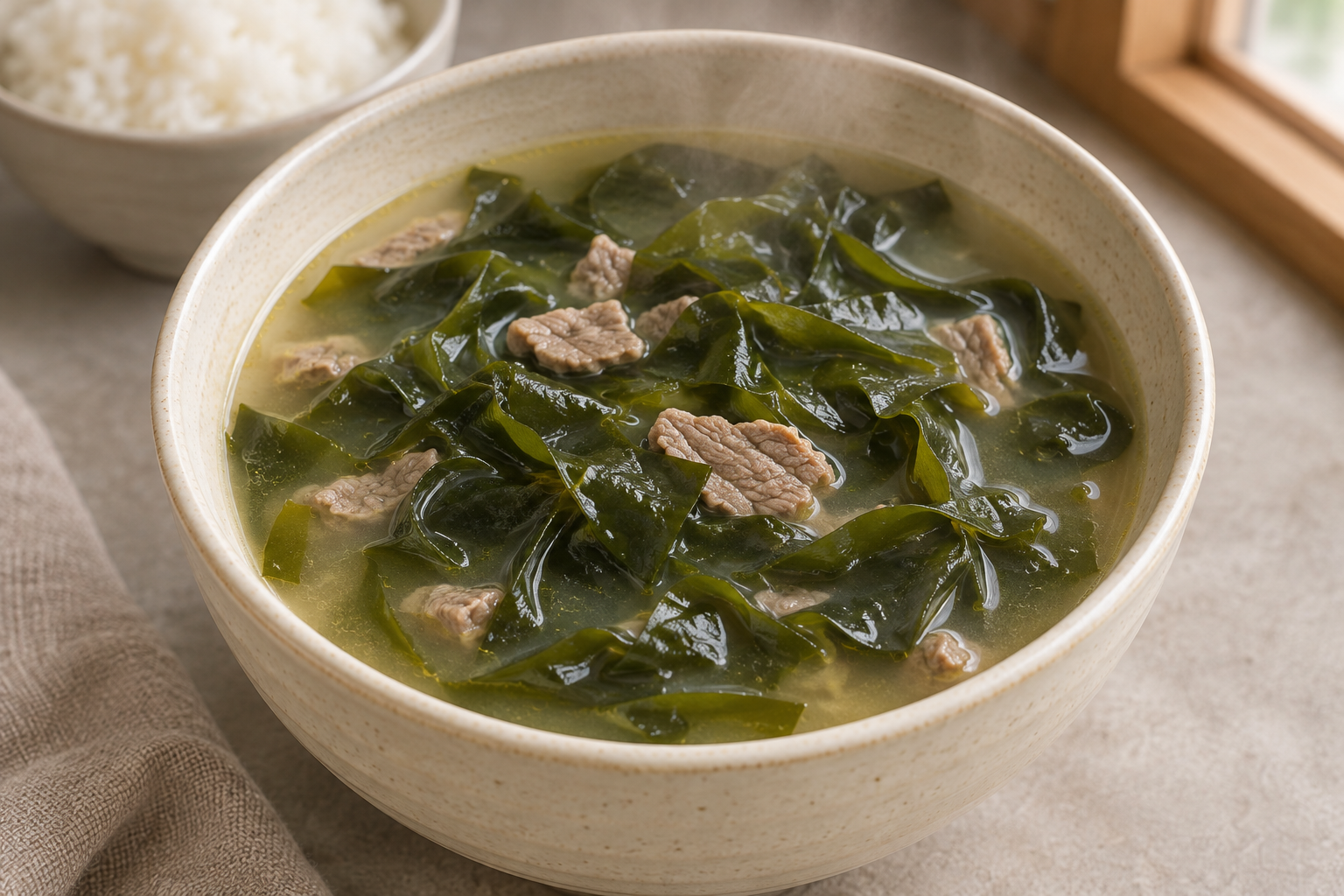
Miyeok guk is a Korean soup made with soft seaweed ribbons. This version uses thin slices of beef brisket and water for a light broth that tastes of both beef and miyeok. For a first pot, weigh the seaweed dry and save part of the soy sauce for the end. Dried pieces expand as they soak, and the broth gets saltier as it reduces.
Makes 3–4 bowls. Allow about 15 minutes to soak and prep, then 30–40 minutes at the stove. The four images are AI illustrations of the steps.
Ingredients for 3–4 bowls
- 15 g dried miyeok (plain dried wakame)
- 180 g thinly sliced beef brisket or chuck, trimmed and cut into bite-size pieces
- 1.2 L water for the soup, plus fresh water for soaking and rinsing
- 10 mL toasted sesame oil (2 teaspoons)
- 15 mL Korean soup soy sauce (gukganjang), divided into 10 mL and up to 5 mL
- 6 g minced garlic (about 2 medium cloves)
- Fine salt, as needed at the end

Which seaweed should you buy?
Look for dried miyeok (미역) or plain wakame. Choose a packet without seasoning: roasted nori sheets and thick pieces of kombu are used for different purposes and will not give this soup its soft ribbons. If your packet is pre-cut, weigh the same 15 g and skip most of the trimming. The package directions take priority if they call for a shorter soak.
1. Soak, rinse, and cut the seaweed
Cover the dried seaweed generously with cold water. Start checking at 10 minutes; most pieces should unfold and bend without a stiff center by about 10–20 minutes. Lift them into a sieve, rinse with fresh water, and drain. Discard the soaking water. Snip any long strands into roughly 3–5 cm pieces so they are easy to scoop with a spoon. If the seaweed still feels sandy, rinse again before it goes into the pot.

2. Sauté the beef and miyeok
Pat the thin beef pieces dry and use a separate board or clean it thoroughly before it touches other ingredients. Warm the sesame oil in a 3 L pot over medium heat. Stir the beef for about 2–3 minutes, breaking up any clumps, until most surfaces lose their red color. Add the drained miyeok and stir for another 2–3 minutes. Stir in the garlic and the first 10 mL of soup soy sauce, then add the water before the garlic darkens. The beef finishes cooking in the broth.

3. Bring to a boil, then simmer gently
Add the 1.2 L of water and bring it to a boil. Skim off surface foam if you prefer a clearer broth. Reduce to a gentle simmer with the lid partly on for 25–30 minutes. Look for small bubbles rather than a hard rolling boil. Spoon out a strand and a piece of beef near the end: the seaweed should bend easily and the beef should be tender enough to chew comfortably. If the meat still feels tight, simmer for another 5–10 minutes and check again; add a little hot water if the level has dropped noticeably.
4. Taste the broth before seasoning
Let a spoonful cool briefly before tasting. If it needs a little more soy flavor, add the reserved soup soy sauce 1–2 mL at a time. If the soy flavor is already clear and the broth just needs salt, use a small pinch of fine salt instead. Stir, simmer for a minute, then taste again. Serve with rice. For a simple meal, add Korean soybean sprout salad on the side.

Fix a bland, salty, or crowded pot
- Thin-tasting broth: If the beef and seaweed are already tender, simmer uncovered for about 5 minutes before adding more seasoning. Taste again; reduction also concentrates salt.
- Too salty: Add 60 mL of hot water at a time and retaste. If the pot is already full, move a portion to a second pot before diluting.
- Too much seaweed: Lift out some cooked ribbons and add a little hot water if needed. Next time, measure the dry weight, since the hydrated volume varies by brand.
- Tough beef: Give the beef more time at a gentle simmer. For the next pot, cut thinner slices across the grain rather than starting with large stew cubes.
Half batches, double batches, and substitutes
For 1–2 bowls: use 7.5 g dried miyeok, 90 g beef, 600 mL water, 5 mL oil, 5 mL soup soy sauce to start and up to 2.5 mL to finish, and 3 g garlic. Use a smaller pot so the liquid does not reduce too quickly. For 6–8 bowls: double the ingredients and use a 5 L pot; sauté the beef in two batches if it piles up. Simmer time depends on the cut, not the number of servings.
If you have only regular light soy sauce, start with 5 mL in the full batch and finish with salt as needed. The color and flavor will differ. Soup soy sauce usually contains soy, and some products contain wheat. The oil contains sesame. Check your own labels when preparing food for someone with an allergy.
Cool and reheat leftovers safely
Portion the soup into shallow containers and refrigerate within 2 hours of cooking, or within 1 hour if the room is above 32°C (90°F). Keep refrigerated at 4°C (40°F) or colder and use within 3–4 days, or freeze portions. For reheating, bring the soup to a boil, stir, and check that it reaches at least 74°C (165°F). Reheat only what you plan to serve.
Recipe and food-safety references
For the traditional dried-miyeok and beef method, see Korean Bapsang’s miyeok guk guide. For storage and reheating, see USDA FSIS guidance on handling leftovers and reheating food safely.
답글 남기기