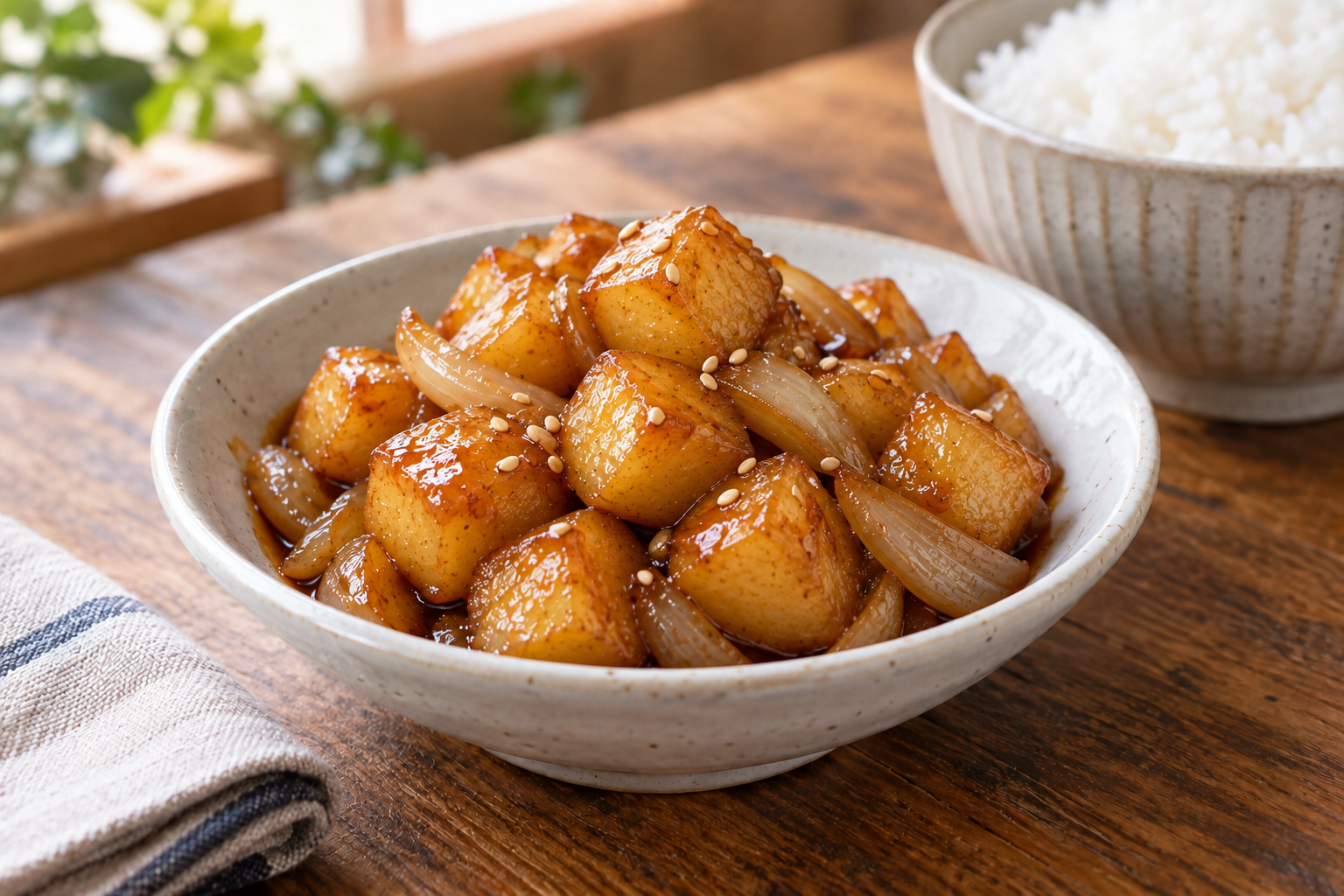
Gamja jorim is a Korean potato side dish, or banchan, cooked in a gently sweet soy sauce. You can serve a small portion alongside rice rather than treating it as a full meal. This 400g batch makes about 2–3 side-dish servings.
The useful distinction is between softening the potato centers and reducing the sauce. If the liquid disappears first, the potatoes may still be firm inside. Starting with less soy sauce also gives you room to adjust the seasoning at the end.
At a glance: about 10 minutes preparation plus 15–20 minutes cooking; 2–3 side-dish servings; a 22–24cm / 9-inch skillet with a lid or a small saucepan. Times are estimates: check the largest potato piece before finishing.
Ingredients for a 400g potato batch

| Ingredient | Amount | Notes |
|---|---|---|
| Peeled potatoes | 400g / about 14oz | Cut into even 2cm / 3/4-inch cubes |
| Yellow onion | 80g / about 2.8oz | Cut slightly smaller than the potatoes |
| Regular soy sauce | 20–30mL | Start with 20mL; reserve up to 10mL for tasting |
| Water | 150mL, plus 30mL as needed | Add more only if the pan dries before the potatoes soften |
| Sugar | 8g | Start with 4g for a less sweet version |
| Minced garlic | 5g | Roughly 1 teaspoon; weight is the more precise guide |
| Neutral cooking oil | 15mL / 1 tablespoon | For the initial sauté |
| Toasted sesame oil | 5mL / 1 teaspoon | Add after turning off the heat |
| Toasted sesame seeds | 1/2 teaspoon, optional | Omit with the sesame oil for a sesame allergy |
Use a 15mL tablespoon and a 5mL teaspoon. Weights are the primary measurements; ounce amounts are approximate. The potato weight is after peeling. Avoid potatoes with extensive sprouting or green discoloration for this recipe.
Choosing potatoes and soy sauce outside Korea
Yukon Gold or other potatoes with a relatively firm texture are convenient when you want tidy pieces. Floury potatoes such as Russets can work, but need gentler handling. This recipe uses ordinary all-purpose soy sauce, not dark soy sauce chosen mainly for color or very salty Korean soup soy sauce. Salt levels vary by brand, so reserve the final 10mL until you have tasted the nearly finished dish.
How to cook gamja jorim
1. Prepare even cubes and the sauce
Cut peeled potatoes into roughly 2cm / 3/4-inch cubes. Rinse, soak briefly for about 3 minutes, then drain and dry the surface. Cut the onion slightly smaller. In a bowl, mix 150mL water, 20mL soy sauce, sugar and minced garlic. Keep the remaining soy sauce separate.
2. Sauté the potatoes gently
Heat the neutral oil in the skillet over medium heat. Add potatoes and cook for about 3–4 minutes, turning occasionally to coat them. The goal is a light sauté, not deep browning or fully cooking the centers at this stage.

3. Cover and braise until the centers soften
Add the sauce mixture and onion. Once it begins to boil, reduce to medium-low, cover and simmer for about 8–10 minutes. Test the center of the largest piece with a skewer or chopstick. If it is still firm, add 30mL water if needed and continue in 2–3 minute intervals. Check partway through so the sauce does not dry out and stick.

4. Uncover and reduce to a light coating
When the potato centers are tender, uncover and simmer for another 3–5 minutes over medium-low heat. Gently shake the pan or turn the pieces carefully rather than stirring aggressively. Stop with about 1–2 tablespoons of sauce left in the pan and a thin coating on the potatoes. Taste and add reserved soy sauce only if needed. Turn off the heat and finish with sesame oil and optional sesame seeds.

If the texture or seasoning is off
- Pieces breaking up: lower the heat and handle them less. Use slightly larger cubes or firmer potatoes next time.
- Dry pan, firm centers: add 30mL water, cover and continue cooking. Do not add more soy sauce just to replace the missing liquid.
- Too salty: skip the reserved soy sauce and stop reducing. A splash of water lowers the concentration temporarily but does not remove salt; adding separately cooked plain potatoes can increase the amount of food sharing that seasoning.
- Too sweet: start with 4g sugar next time. Adding soy sauce to mask sweetness also increases the salt.
Scaling, substitutions and dietary checks
For 800g potatoes, double the onion and seasoning amounts as a starting point, but use a wider pan or cook two batches. Liquid evaporation depends on the pan and heat, so monitor the water rather than promising the same cooking time. Onion is optional; omitting it changes the sweetness.
For a vegan version, check that your soy sauce and other packaged ingredients contain no animal-derived additions. For gluten avoidance, use a product explicitly labeled gluten-free rather than assuming all tamari is suitable. Soy, wheat and sesame may be allergens; check the actual labels. Sesame oil and seeds can be omitted. A substitute sauce may need a different quantity because its salt level can differ.
Serving, storage and sources
Serve a small bowl with rice and other dishes. Set aside leftovers with clean utensils. Following the UK Food Standards Agency’s general leftover guidance, refrigerate within 2 hours and eat within 48 hours. Reheat only the portion you need, once, until hot throughout. Reheating does not reliably rescue food that has been stored improperly.
- Korean Bapsang: Gamja Jorim — consulted for potato choices and the basic sauté-and-braise method.
- Food Standards Agency: Cooking your food — consulted for leftover handling and reheating guidance.
Sources checked October 11, 2026. This small-batch formulation is an editorial guide, not a claim that the cited source tested these exact quantities or that we personally cooked this batch. All images are AI-generated illustrations, not photographs of a cooking test. Use the written measurements and doneness cues rather than the quantities pictured.
답글 남기기